
PROJECT & PROCUREMENT GUIDE
30 years of experience in sleep products
For Comfort is a Saudi brand with 30 years of experience in sleep products. This guide explains mattress construction and how to prepare a clear specification; the actual components of each model are documented on its product page and in the catalogue.
Inside the mattress: support, comfort and cover
Read the construction from the support system outward: pocket springs, Bonnell springs or foam, depending on the model. Comfort layers, cover and the remaining specified components complete the assembly. The cover’s appearance alone does not identify the construction.
The catalogue or model page identifies layer types and measurements where listed. Compare material names and units carefully: foam density, foam thickness and overall mattress height are different properties.
Turning requirements into a specification
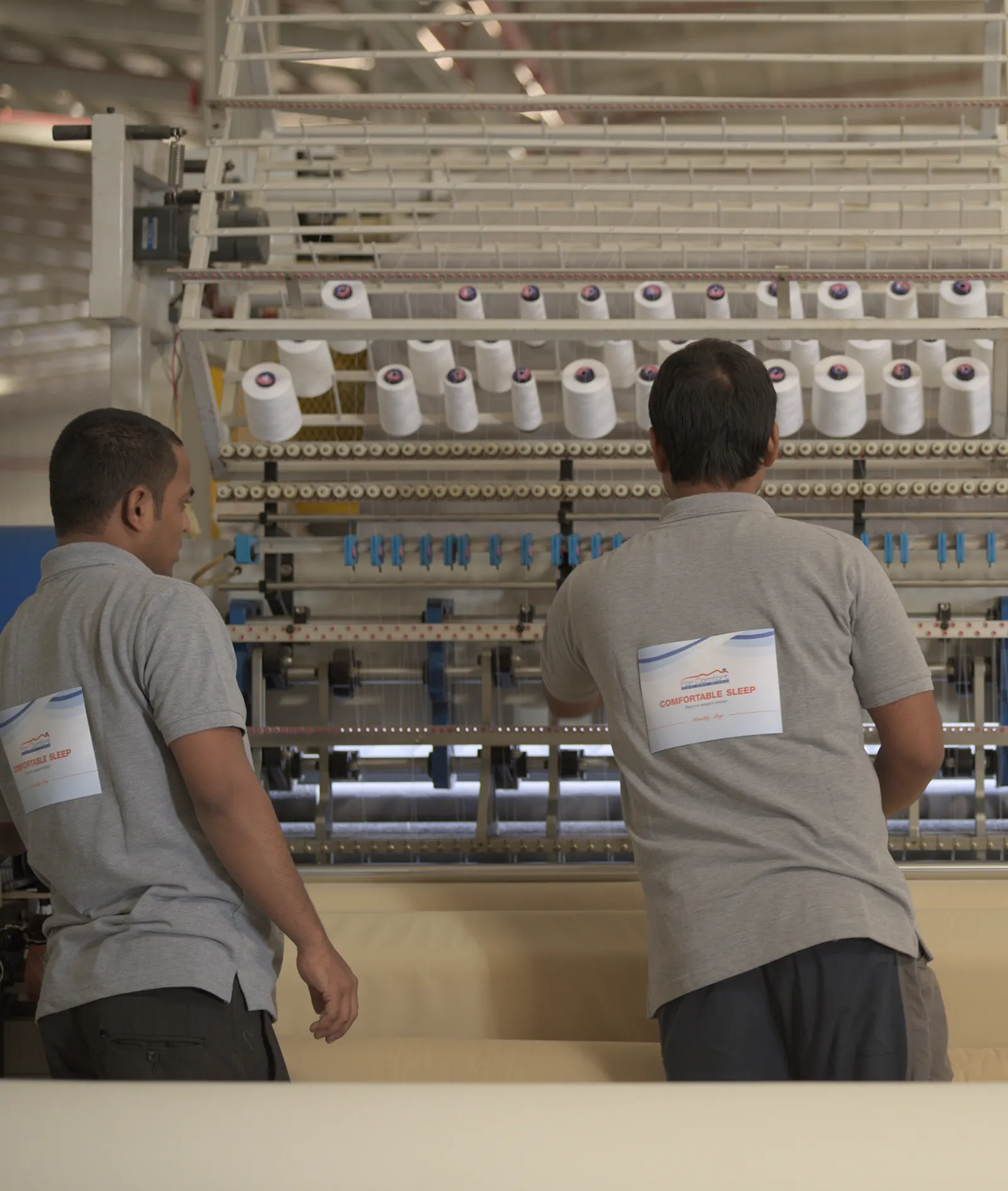
As a general explanation of mattress production, the process starts with design, dimensions and component selection, followed by preparation, assembly, covering, finishing and review before dispatch preparation. This is an educational overview, not a claim about a particular test, certification or production line.
For your enquiry, the agreed specification should remain the reference: product or design name, dimensions, components and quantity. Ask for clarification of differences between a reference model and the proposed product before accepting a quotation.
Discussing customization and private label
To discuss a custom enquiry, identify what you want to change: dimensions, components, cover, branding or packaging. State the target market and expected quantity, and keep unresolved choices explicit rather than assuming approval.
Feasibility, scheduling and commercial requirements need review by the team. Factory photographs and company experience do not establish a production capacity, delivery lead time or minimum order quantity.
Frequently asked questions
How does For Comfort describe its experience?
The company uses 30 years of experience in sleep products as its approved description. This describes the stated experience; it does not establish an incorporation year or legal registration date without supporting documentation.
What are the main parts of a mattress?
Construction includes a support system, comfort layers, cover and additional components depending on the model. Details vary, so consult the model’s layer list rather than assume one construction applies to the whole range.
How does the support system differ from comfort layers?
The support system forms the core structure, while upper layers contribute to the surface feel. Components work together, so assessing a mattress from one layer or material name alone is incomplete.
What are the general stages of mattress production?
A general sequence is specification, component preparation, assembly, covering, finishing, review and preparation for supply. This is an overview; any specific testing procedure or project requirement needs confirmation from the team.
How can material or size changes be discussed?
Send the reference model, requested change, intended use and quantity. The team reviews feasibility and specifications before proposing an option; an enquiry does not approve every suggested change.
What details are needed for a private-label project?
Prepare the product brief, target market, quantity, dimensions, branding and packaging requirements, and any mandatory specification. Technical and commercial details and permission to use the brand must be agreed before production.
How can specifications be checked before ordering?
Review the model page and catalogue, then ask for the relevant specifications to be recorded in the quotation. If an image or general description differs from your requirements, seek written clarification rather than infer a match.
Does every model use the same materials?
No. Each model has its own documented construction and layers. Latex, memory foam or a particular spring specification in one model does not mean those components are present in every mattress.